Getting started with knitting
A short, honest guide to picking up your first needles and finishing your first project from Knit Grove.
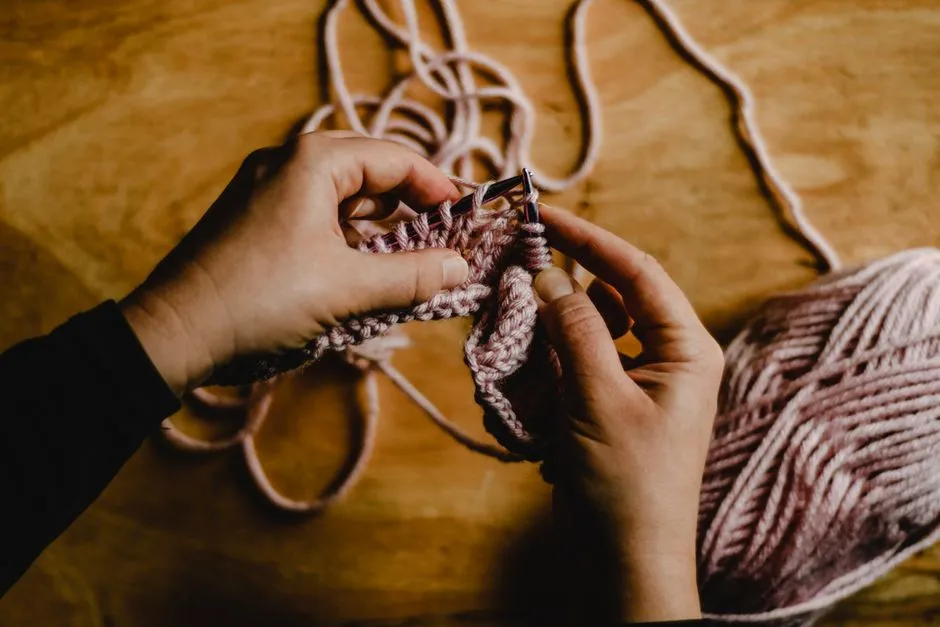
Knitting looks intimidating from the outside and is, mostly, not. There are exactly two stitches — knit and purl — and almost everything else in the craft is a combination, a count, or a choice of when to do which. If you can tie a shoelace, you can knit. Give yourself a quiet weekend afternoon and a generous swatch of yarn, and you'll have something usable by Sunday evening.
What to buy
Skip the beginner kit. Buy one ball of smooth, light-coloured worsted-weight wool — anything labelled "worsted" or marked with a "4" in a yarn-weight symbol. Dark or fluffy yarn hides your stitches and makes learning frustrating. Then buy a 5 mm (US 8) pair of straight needles. Wood is gentler on the hands than metal for beginners. Total spend: about $15, less if you can borrow.
The cast-on
The long-tail cast-on is the most useful first cast-on. There are clear video tutorials everywhere; we like the ones that show the technique slowly, twice, from two angles, without music. Cast on twenty stitches and let yourself be a little clumsy — the first row of any project always looks worse than the rest, and almost no-one ever sees it.
The garter swatch
Knit every stitch on every row for forty rows. That's it. The fabric you'll produce is called garter stitch. Notice how it has a stretchy, ridged texture and lies flat without curling. You've just made the foundation of a hundred patterns in our catalogue, including most of the scarves and many of the blankets.
Adding the purl
Once garter feels comfortable, learn the purl stitch. A row of knits followed by a row of purls produces stockinette, the smooth, V-shaped fabric you see on T-shirts. With knit and purl in hand you can read almost any beginner pattern in the Knit Grove catalogue and follow it line-by-line.
Your first pattern
Pick a simple scarf or hat pattern from the Scarves or Hats category. Read the whole pattern through once before casting on — even the bits you don't understand yet. Get used to the structure of a pattern: materials, gauge, instructions, finishing. Then cast on, breathe, and start. If you mess up in the first ten rows, rip back and re-cast — you'll lose ten minutes and gain an evening of confidence.
What to do when you're stuck
Stop. Put the work down. Look at it again with fresh eyes the next morning. Most knitting mistakes are not as bad as they look at midnight. If you genuinely can't move forward, write to us at hello@knitgrove.com with a photograph and the URL of the pattern, and we'll usually be able to point you to the row to rip back to.
Finishing well
The most under-rated step in knitting is blocking. After your project is bound off and the ends are woven in, soak it in lukewarm water for fifteen minutes, gently squeeze the water out in a clean towel, and lay the piece flat on a dry towel until it's dry. The change is dramatic. Lace opens up, stockinette flattens, cables pop. A blocked beginner project looks better than an unblocked expert one.